
How to Support a Parent Going Through Chemotherapy: 10 Meaningful Ways to Help
How to Support a Parent Going Through Chemotherapy: 10 Meaningful Ways to Help
Watching your mom or dad go through chemotherapy can be one of the hardest experiences for a family. You want to help, make things easier, and find the right words, but sometimes you don't know where to start.
Whether your parent has just been diagnosed with cancer or is already undergoing treatment, small, thoughtful gestures can make a meaningful difference.
As a Stage 4 cancer survivor and founder of Chemo Kits, I know firsthand how much support can matter during cancer treatment.
If you're wondering how to support a parent going through chemotherapy, here are 10 practical and meaningful ways to show up for them.
1. Offer to Drive Them to Chemotherapy Appointments
Chemotherapy appointments can be long and tiring. Depending on their treatment and medications, your parent may need someone to drive them home.
Offer to handle transportation, parking, or scheduling when possible.
Sometimes removing one small responsibility can make a difficult day feel a little easier.
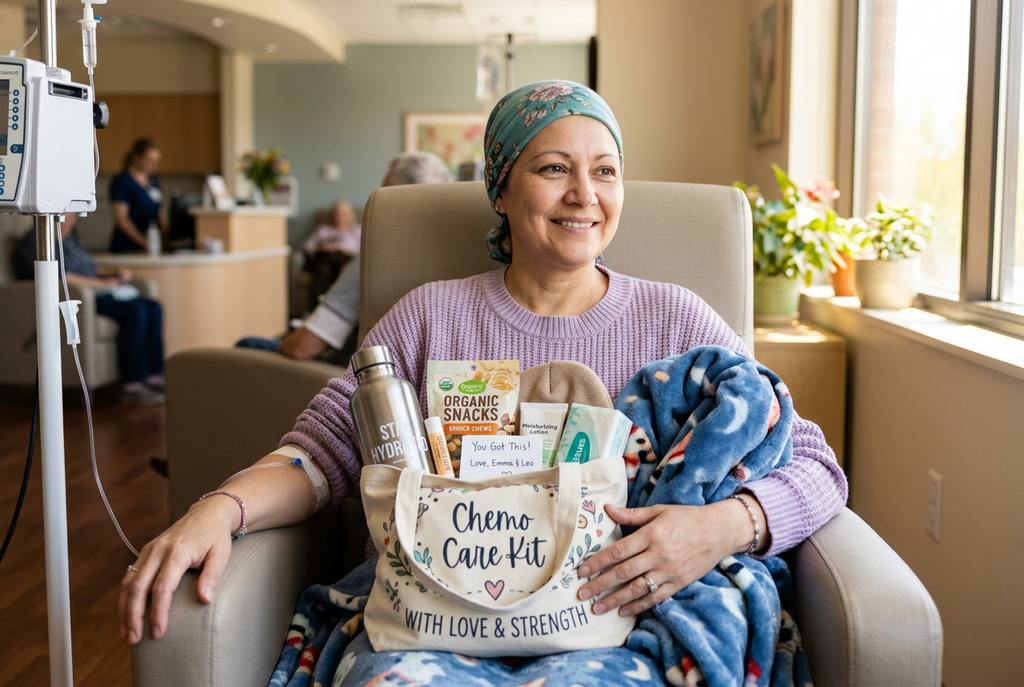
2. Put Together a Thoughtful Chemo Care Package
A thoughtful care package can provide practical comfort during treatment and remind your parent that you're thinking of them.
Consider including soft socks, a comfortable head covering, lip balm, a notebook, or a handwritten note.
If you're looking for something ready to send, our Chemo Queen Kit is thoughtfully curated with comfort essentials and encouragement for women undergoing cancer treatment.
For dads, our Men's Chemo Comfort Kit offers practical items selected with treatment days in mind.
3. Help With Grocery Shopping and Meals
Cancer treatment can affect energy levels, appetite, and taste preferences.
Offer to pick up groceries, prepare a favorite meal, or arrange food delivery.
Before bringing food, ask about dietary restrictions, food safety recommendations, and what sounds appealing that day.
4. Listen Without Trying to Fix Everything
It's natural to want to reassure your parent that everything will be okay.
But sometimes they don't need advice or encouragement. They simply need someone who will listen.
Instead of immediately offering solutions, try asking:
"Do you want to talk about it, or would you rather have a distraction?"
Giving your parent the choice can help them feel heard and respected.
5. Help With Household Chores
Laundry, dishes, cleaning, and everyday errands can become overwhelming during treatment.
Offer to take care of a specific task rather than waiting for your parent to ask.
You might say, "I'm coming by Saturday. Would it help if I took care of the laundry or groceries?"
Practical help can be one of the most meaningful forms of support.
6. Keep Them Company During Treatment
Some people appreciate having a loved one beside them during chemotherapy, while others prefer quiet time.
Ask your parent what they would find most helpful.
If visitors are permitted, you could bring a book, watch a movie together, or simply sit with them.
If you live far away, a thoughtful message or video call can help you stay connected.
7. Respect Their Independence
A cancer diagnosis doesn't mean your parent wants to lose control over everyday decisions.
Ask before taking over responsibilities or sharing information about their diagnosis.
Let them decide how much help they want and when they want it.
Supporting someone also means respecting their boundaries.
8. Help Them Stay Organized
Cancer treatment can involve appointments, medications, paperwork, and follow-up visits.
If your parent wants assistance, offer to help organize appointments, prepare questions for their oncology team, or keep important information in one place.
A notebook or shared calendar can make it easier to track details.
9. Remember They're Still Your Mom or Dad
Cancer may become a major part of your parent's life, but it doesn't define who they are.
Talk about everyday things. Share funny stories. Watch a favorite show together.
Not every conversation needs to revolve around treatment.
Sometimes a sense of normalcy is exactly what someone wants.
10. Continue Showing Up Throughout Treatment
Support often arrives immediately after a cancer diagnosis, but chemotherapy can last for months.
Continue checking in, even after the initial rush of attention fades.
A simple "Thinking of you today" or "Can I bring you dinner this week?" can be meaningful.
Consistency matters more than grand gestures.
What to Buy a Mom or Dad Going Through Chemotherapy
If you're looking for a thoughtful gift for a parent with cancer, consider items that combine practicality and comfort.
For moms, a soft head wrap, moisturizing lip balm, notebook, and gentle hand cream may be appreciated.
For dads, comfortable socks, a soft beanie, sleep mask, and phone stand can be useful during longer appointments.
At Chemo Kits, we've made it easier to send these thoughtful essentials in one care package.
Shop the Chemo Queen Kit for Mom
Shop the Men's Chemo Comfort Kit for Dad
You can also explore our collection of chemo care packages to find a thoughtful gift for someone you love.
What to Say to a Parent Going Through Chemotherapy
You don't need the perfect words.
Sometimes the simplest messages are the most meaningful:
-
"I'm here for you, whatever you need."
-
"You don't have to go through this alone."
-
"Would you like me to come to your next appointment?"
-
"I love you, and I'm thinking of you."
-
"We can take things one day at a time."
If you're struggling to find the right words, read our guide on what to say to someone starting chemotherapy.
A Final Thought From a Cancer Survivor
When someone you love is going through cancer treatment, it's easy to feel helpless.
But you don't have to solve everything.
Sometimes showing up, listening, helping with an everyday task, or sending a thoughtful gift can make someone feel less alone.
That's why I created Chemo Kits. To make it easier to send comfort and encouragement when words don't feel like enough.
Explore Chemo Kits and send a little comfort today.
This article provides general support and gift suggestions, not medical advice. Follow the guidance of your parent's oncology team regarding treatment, nutrition, medications, and safety.
Related post
10
Nov